Isolation and Characterization of Plant Growth Promoting Bacteria from Contaminated Soil and their Impact on Triticum Aestivum
Khadija Fatima1 | Sara Afzal2 | Ushna Gulab2 | Adnan Shoukat1 | Fazal Mehmood Khan2 |Iftikhar Ali3
1Institute of Molecular Biology and Biotechnology (IMBB), University of Lahore, Lahore, Pakistan
2Institute for Advanced Study, Shenzhen University, China 3Department of Life Sciences, University of Management and Technology, Lahore, Pakistan
*Correspondence
Iftikhar Ali
Email: iftikhar_ali_iftikhar@yahoo.com
ABSTRACT
Plant growth promoting bacteria (PGPB) or plant growth promoting rhizobacteria (PGPR) are bacteria that exist in the rhizospheres of plant soil and form symbiotic relationships with the plant. Some of the methods through which PGPR aid in plant growth is by playing a role in nitrogen fixation, phosphate solubilization, iron chelation, reduction of heavy metal uptake by plant, reducing spread of plant diseases, secretion of phytohormones, significantly influencing root morphology and growth and by increasing the bio-availability of nutrients in the soil. Triticum aestivum, known by its common name wheat is part of the Pooideae family which contributes significantly to the world's food supply because of which its cultivation is of great significance. One way to develop methods to cultivate this crop by using sustainable methods that can also increase the quality and yield of this crop is by treating the seeds of this plant with PGPB. In this study we examined the potential impact of bacteria, isolated from contaminated soil, on plant development and growth promotion. Our study aimed to isolate and characterize these bacteria and, after treatment of the seeds of Triticum aestivum with each of the bacterial isolates, test their ability to positively influence the growth of Triticum aestivum. After isolation and purification of the bacterial strains via quadrant streaking, we performed microscopic analysis and biochemical tests on the bacterial isolates which were thus identified to be Escherichia coli, Staphylococcus aureus and Pseudomonas spp. We compared the growth of the seeds treated with each bacterial isolate with that of the control. The parameters that were taken into account and compared were root and stem length and the number of leaves, branches and roots. E.coli increased the steam and root length of wheat whereas, S. aureus increased the number of branches but it decreased the root length. While Pseudomonas spp. increased the stem and root length and increased the number of branches. Hence, Pseudomonas spp. was the most effective boosting more aspects of wheat growth in comparison to E. coli and S. aureus.
Keywords:
PGPB, wheat, growth, bio-availability
1. INTRODUCTION
Wheat, also known by its scientific name Triticum aestivum, is one of the staple cereal crops in the world [1].This grass species is a part of the Triticeae botanical tribe which is an important sub-family of the Pooideae family and it contributes significantly to the world's food supply [2]. The Triticeae tribe contains both perennial and annual species totaling to around 500 species; including durum wheat (T. turgidum sup. durum), rye (Secale cereal L.), barley (Hordeum vulgare L.), crops wheat (Triticum aestivium L.), and triticale (Triticosecale Wittm) [3]. There are 27 genera in the Triticeae tribe with diploid and polyploid species [4]. These genera are divided into the Hordeinae and Triticinae subgroups. Triticum, Agropyron, Haynaldia, Aegilops, and Secale are the principal genera of the subgroup Triticinae. The Triticum plants are annuals that can be found either in spring or winter forms and they exhibit the following physical characteristics: a bald, smooth and hollow culm, measuring between 0.7 and 1.6 meters in height [5]. The consumption of foods made from wheat, such as bread, chapati, roti and different sweets are fundamental in Pakistani cuisine. Many traditional and modern cuisines use wheat flour as their main component [6]. The nation grows wheat during the Rabi (fall/winter) season [7]. 14% of Pakistan’s gross domestic product (GDP) comes from wheat and the country is the eighth-largest producer of wheat in the world [8]. Hence millions of Pakistanis depend on it for their livelihoods, and it is a key crop in crop rotation systems that improve soil fertility and sustainability [9]. Due to its crucial role in guaranteeing the population's nutrition and food security, wheat is heavily relied upon in this region.
Bacteria are microscopic, single-celled organisms that are found nearly everywhere on Earth including the soil, water, and even inside living things and these microorganisms come in a variety of shapes with distinctive properties [10]. In agriculture, particular bacterial strains, referred to as Plant Growth-Promoting Bacteria (PGPB), provide a substantial contribution to soil fertility and plant growth through various different processes [11]. The Plant Growth-Promoting Bacteria (PGPB) have emerged as the hidden heroes of agriculture within this microcosm. These helpful bacteria play roles in sustaining and improving plant health that go beyond their fundamental functions. These microscopic organisms especially play a vital role in the cycling of nutrients. The foundation of nutrient cycling is bacteria and their wide range of metabolic abilities that allow the breakdown of complicated molecules into simpler ones that plants, such as wheat, can use to grow and maintain themselves [12]. PGPB also act as biological control agents to stop the spread of plant illnesses brought on by nematodes, viruses, plant pathogenic fungi and even other bacteria [13]. The diazotropic PGPB also aid in nitrogen fixation by helping to deliver an influx of nitrogen to the plant roots as either symbiotic or free-living bacteria to aid in their growth [14]. PGPB also produce phytohormones (auxin and cytokinin) and siderophores and also play a role in chelation and phosphate solubilization, all of which can contribute positively to the overall health of wheat [15][16].
Thus, for sustainable agriculture, their symbiotic interaction with plants has significant importance due to the above-stated reasons. Utilizing PGPB's potential will also enable us to move away from the use of toxic pesticides and fertilizers and toward farming methods that are both economically and environmentally acceptable as well as sustainable. We unintentionally force our soils through a variety of challenges in our desire for higher agricultural yield as the delicate microbial balance has been upset by the widespread use of chemical pesticides and fertilizers, which has caused soil degradation due to the deposition of pesticide residues in the soil leading to the eco-toxicological disruption of diversity, abundance and function of the soil PGPB [17]. Hence, sustainable agricultural methods are more important now than ever. This can be achieved through adopting practices such as organic farming, crop rotation, the use of cover crops, using bio-stimulants such as PGPB and Plant Growth Regulators (PGR) etc. that can reduce the susceptibility of wheat to stress, phytopathogens and soil degradation [18]. PGPB also facilitate the efficient uptake and use of nitrogen by wheat plants [19]. The overproduction of various low molecular weight, nontoxic, suitable organic solutes is one of plants' most prevalent stress tolerance strategies but the bacterization of the wheat endophytes can aid in better wheat growth under stress conditions. They protect wheat and other plants from dangerous environmental circumstances through a number of methods, such as modifying, stabilizing and detoxifying reactive oxygen species, producing osmolytes and exopolysaccharides, and performing phosphorous solubilization and mobilization [20].
In our study, we aimed to isolate bacterial strains from contaminated soil, identified and characterized them and then we studied the individual effect of these strains on the growth of Triticum aestivum plant in an effort to highlight bacterial strains that have the potential to improve the health and yield of wheat crops and can help to attain satisfactory growth of wheat without the use of chemical fertilizers, pesticides or other environmentally unfriendly products. Contaminated soil was chosen because there is a high level of soil contamination in Pakistan so it would be worthwhile to check if such soil could have potential to help grow wheat by possessing PGPB.
By adding appropriate components, all mediums and solution were made using distilled water in glass apparatus. Agar was added where it was mentioned to create solid media. All medium and solution were sterilized by autoclaving at 121 °C for 15 minutes with 15 lbs/sq. inch before use. Before use, glassware was professionally cleaned and dried in oven at 50 °C.
2.1 Soil Sampling
A sample of contaminated soil was collected from the University of Lahore in Lahore, Pakistan. In order to collect the soil sample, a spade was used to dig up the soil to a depth of 12 cm and then approximately 10 grams of soil was collected from the rhizosphere. The roots were removed and the soil sample was stored in a plastic container. Then the sample was transported to the lab in aseptic conditions. This sample was then air-dried and homogenized. The characteristics and properties of this soil i.e. pH, temperature and moisture content were recorded.
2.2 Isolation of Bacteria from Soil Samples
The soil sample was diluted by ten times to a dilution factor of 10-6 as follows: Six test tubes were taken and, with the help of a glass pipette, 9 ml of 0.9% normal saline solution was added to each as a diluent. These test tubes were then autoclaved. 1 gram of soil sample was weighed using a weighing balance and was transferred to one of the test tubes, which was then vortexed, making its total volume 10ml and giving it a dilution factor of 10-1. Then, 1ml of solution was taken from 10-1 test tube and added to another test tube containing 9ml sterile normal saline and the test tube was vortexed. In this manner this test tube’s total volume was 10ml and dilution factor was 10-2. In this way, serial dilutions were prepared in all 6 test tubes up to 10-6 dilution factor.
2.3 Bacterial Growth and Sub-culturing
After the process of serial dilution, we prepared 6 plates of nutrient agar (N-agar). Nutrient agar is a versatile nutrition medium as it contains many of the nutrients required for bacterial growth (composition: peptone 0.5%, yeast extract 0.3%, agar 1.5%, NaCl 0.5%). 28 g of N-agar powder was dissolved in 1 liter of distilled water and this mixture was autoclaved at 121℃ for 15 minutes along with 6 glass petri plates. The pH was adjusted to 7.4 at 25℃ and 20ml of N-agar was poured into each petri plate inside a laminar flow hood to avoid contamination. Then the plates were allowed to solidify inside the laminar flow hood.
After the N-agar plates were solidified, we poured 0.2ml of each diluted tube sample in one N-agar plate by using a micropipette and spread it in the plate using a glass spread. The plates were then incubated for a period of 24 hours at 37°C, after which bacterial growth on the plates was observed. Growth of multiple bacterial colonies was observed on each plate.
2.4 Colony Forming Unit (CFU)
To calculate the colony forming units (CFU) per milliliter in the diluted soil samples, we multiplied the number of CFU on the countable plates by 1/FDF (FDF= Final Dilution Factor). This accounted for the entire dilution of the starting sample. There were 200 colonies on the countable plate, resulting in 200 CFU, and the FDF was 1/4000.
2.5 Isolation and Purification
We prepared another 3 petri plates with N-agar. In order to isolate bacterial strains, we picked one bacterial colony which was different in size, shape and color from the each bacteria-containing petri plate and streaked each on the freshly prepared N-agar plates via quadrant streaking. Then these plates were incubated for 24 hours at 37°C to allow the isolated bacteria to grow on each plate. Then the isolates were purified by repeating quadrant streaking on fresh N-agar plates. In this way, isolation and purification of the bacterial isolates was achieved. A total of 3 bacterial strains were isolated and purified through subsequent sub-streaking. The isolates were code named as IS-1, IS-2 and IS-3 and these were used for the further experiment.
2.6 Gram Staining and Microscopic Analysis
For Gram staining, a droplet of distilled water was inserted in the middle of a glass slide. A pure bacterial culture was picked using an inoculating loop and mixed in the water drop on the slide and the smear was allowed to air dry. Heat was used to thoroughly fix the bacterial stain. Smear was dyed for one minute in crystal violet solution. The excess stains were eliminated by washing with distilled water and, after applying mordent (iodine) and decolorizer (ethanol), safranin counterstain was applied for 1 minute and then excess dye was washed off. In order to evaluate the results of gram staining and cell morphology, the slides were examined under a microscope using an oil immersion lens. One slide was prepared for each of the 3 bacterial isolates. Gram-positive bacteria typically have a purple to blue appearance, while Gram-negative bacteria typically have a pink to red appearance and the most typical shapes are circular (cocci) and rod-shaped (bacilli).
2.7 Biochemical Characterization of Bacteria
We identified the bacterial strains by using the biochemical panel API (Analytical Profile Index) 20E. API identification goods include test kits for recognizing yeast, bacteria, and both Gram positive and negative bacteria.
These are the following tests in the kit:
can detect the enzyme -galactosidase.
2.8 Seed Germination
A control tube and three other tubes of nutrient broth (N-broth) were prepared. N-broth is a liquid media used to cultivate a variety of organisms in laboratories and we used it in order to foster the growth of the bacterial strains to ensure that an ample amount of each bacterium was present in each tube at the time of seed germination. This would result in a high bacterial count which will ensure the bacterial colonization of the seed surface hence giving accurate results regarding the effect of the bacterium on seed growth. First, we inoculated each strain of bacteria in one N-broth tube and incubated them for 24 hours in a shaking incubator to allow for bacterial growth. Then we dipped the seeds of Triticum aestivum in each of the nutrient broth tubes with the help of forceps and placed the tubes a shaking incubator for 24 hours again. Then we took twelve pots of sand and labelled three pots for each bacterial strain i.e. S. aureus, E. coli, and Pseudomonas spp. We planted three pots with seeds treated with E. coli, three with S. aureus seeds, and three more with Pseudomonas-treated seeds. We sowed three to four seeds in each pot and also placed three to four seeds in each of the three pots for control group. We added water after planting the seeds and sprayed each container just enough to keep the pot mix moist but not soggy. Then we watered the pots periodically and kept the pots in a warm, shaded place for a period of twenty-two days after which, the results were measured and recorded.
3.1 Soil Sample Characteristics
The pH, temperature and moisture content of the contaminated soil sample were recorded and then the sample was diluted up to a dilution factor of 10-6 after which, the CFU was calculated. The results are presented in table 1:
Table 1. Soil conditions
|
Characteristics |
Soil Sample |
|
pH |
6.5 |
|
Humidity |
25% |
|
Temperature |
29oC |
|
CFU |
1/20 cfu/ml |
Table 2. Characteristics of isolated strains
|
Characteristics |
Bacterial Isolate |
||
|
IS-1 |
IS-2 |
IS-3 |
|
|
Colony shape |
circular |
circular |
circular |
|
Colony color |
yellow |
yellow-green |
yellow |
|
Colony size (mm) |
4 |
1.5 |
3 |
|
Margins |
fixed |
serrated |
irregular |
|
Elevation |
Convex |
Convex |
Convex |
|
Gram reaction |
|||
|
Cell shape |
rod |
rod |
cocci |
|
Cell arrangement |
solitary |
solitary |
chain |
|
ONPG |
|||
|
ADH |
|||
|
LDC |
|||
|
ODC |
|||
|
CIT |
|||
|
H2S |
|||
|
URE |
|||
|
TDA |
|||
|
IND |
|||
|
VP |
|||
|
GEL |
|||
|
GLU |
|||
|
MAN |
|||
|
INO |
|||
|
SOR |
|||
|
RHA |
|||
|
SAC |
|||
|
MEL |
|||
|
AMY |
|||
|
ARA |
|||
3.2 Gram Staining, Microscopic Analyses & Biochemical Testing
After isolation of selected bacterial colonies via quadrant streaking, the mixed colonies were formed after incubation for 24 hours at 37°C. These were purified by subsequent round of quadrant streaking afterwards. Identification of bacteria after gram staining was performed by using standard protocol under a light
microscope using the 100X oil immersion lens after the staining process was completed. The findings of biochemical tests, staining and morphological analysis of the 3 bacterial strains are summarized in table 2.
By using API20 kit and gram staining, we identified the three bacterial isolates to be Escherichia coli, Pseudomonas spp., and Staphylococcus aureus bacteria respectively.
3.3 Seed Germination
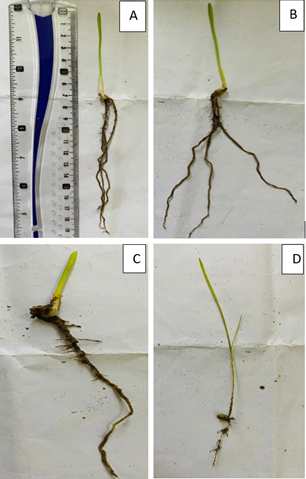
Figure 1. Germination and development of wheat seeds when treated with a) control b) E. coli c) Pseudomonas spp. and d) S. aureus.
3.4 Effect of E. coli Treatment on the Growth of Triticum aestivum seeds
By the treatment of Triticum aestivum seeds with E. coli, we found no change on the number of leaves after the end of the 22 days period as the control and all 3 experimental pots had no leaves. There was no change in the number of branches compared with the control pot either. Stem length was observed to be 5.8cm in control pot, 7cm, 9.5cm and 2cm in the three experimental pots, the mean of which was 6.16cm. The root length was observed to be 7cm in the control pot while it was 12cm, 7cm and 2.5cm in the three experimental pots (mean= 7.16). Moreover, the number of roots was observed to be 3 in the Control pot while in all the three experimental pots it was also 3. Hence there was no change in the number of roots either. It can be concluded that with treatment of Triticum aestivum with E.coli, the number of leaves, branches and roots is not affected while the stem and root length is increased. The results have been summarised in table 3.
By the treatment of Triticum aestivum seeds with Pseudomonas, there was no effect on the number of leaves after the end of 22 day period. There were no leaves in both the control and experimental groups. 1 branch was observed in the control pots while 2 branches were observed in two experimental pots while the third showed no branches. The mean of the number of branches in the experimental group was 1.3. Furthermore, the stem length was 4cm, 3cm and 4.5cm in the three experimental pots and the mean was 3cm. Root length was 3.5 cm, 10cm and 8cm in the three experimental pots and the mean was calculated to be 7.16cm. The number of roots was observed to be 3 in the control pots while in the experimental pots it was 4, 1, and 3 and the mean was calculated to be 2.7. Thus, we can conclude through these results that by the treatment of Triticum aestivum seeds with pseudomonas, the stem length, root length and number of branches is increased. The number of roots is decreased whereas there is no effect on the number of leaves. These results are summarized in table 4.
Table 3. Effect of E. coli on the growth of Triticum aestivum seeds
|
Parameters |
Control |
Exp.1 |
Exp.2 |
Exp.3 |
Mean |
|
No. of leaves |
0 |
0 |
0 |
0 |
0 |
|
No. of branches |
1 |
1 |
1 |
1 |
1 |
|
Stem length |
5.8cm |
7cm |
9.5cm |
2cm |
6.2cm |
|
Root length |
7cm |
12cm |
7cm |
2.5cm |
7.2cm |
|
No. of root |
3 |
3 |
3 |
3 |
3 |
Table 4. Effect of Pseudomonas spp. on the growth of Triticum aestivum seeds
|
Parameters |
Control |
Exp.1 |
Exp.2 |
Exp.3 |
Mean |
|
No. of leaves |
0 |
0 |
0 |
0 |
0 |
|
No. of branches |
1 |
2 |
0 |
2 |
1.3 |
|
Stem length |
5.8cm |
4cm |
3cm |
4.5cm |
3cm |
|
Root length |
7cm |
3.5cm |
10cm |
8cm |
7.2cm |
|
No. of roots |
3 |
4 |
1 |
3 |
2.7 |
Table 5. Effect of S. aureus treatment on the growth of Triticum aestivum seeds
|
Parameters |
Control |
Exp.1 |
Exp.2 |
Exp.3 |
Mean |
|
No. of leaves |
0 |
0 |
0 |
0 |
0 |
|
No. of branches |
1 |
2 |
2 |
0 |
1.3 |
|
Stem length |
5.8cm |
10cm |
3.4cm |
4cm |
5.8cm |
|
Root length |
7cm |
1cm |
4cm |
7.5cm |
4.2cm |
|
No. of roots |
3 |
2 |
3 |
3 |
2.7 |
By the S. aureus treatment of the seeds of Triticum aestivum, there were no effects on the number of leaves after the end of the 22-day period. There was 1 branch in the control pot, and 4 total branches in the treated experimental pots (mean=1.3). Stem length was 10 cm, 3.4cm and 4cm in the three experimental pots and the mean was calculated to be 5.8cm. Root length was 1cm, 4cm, and 5.7cm in the three experimental pots (mean=4.2cm). Number of roots was observed to be 3 in control pots; 2, 3 and 3 was observed in the three experimental pots so the mean was 2.7. Thus, we can conclude that by the S. aureus treatment of the seeds of Triticum aestivum the number of leaves and stem length remains unchanged while the number of branches was slightly increased. Whereas a decrease was observed in the number as well as the length of the roots. These results are summarized in table 5.
It would be ideal if crop plants could be improved to meet the needs of the large population. In agricultural species, seed treatment with beneficial bacteria can be effective, but the induced mechanism of PGPR for germination and growth is yet unknown. Our study offers perspectives on how seed treatment technology affects the germination and development of wheat plants specifically Triticum aestivum. Utilizing helpful bacteria to treat seeds would enhance yield and decrease the need for pesticides and chemical fertilizers, both of which have many harmful effects on both the environment and people [21]. The widespread application of particular strains and cost-benefit ratios are two factors that will determine if the economic use of PGPB can become a standard agricultural practice. Afzal et al., 2005 claimed that inoculating wheat (Triticum aestivum) with Pseudomonas species boosted wheat grain production by increasing phosphorus uptake. When combined with phosphorus fertilizer, single and dual inoculation enhanced wheat grain output by 30% to 40% whereas double inoculation alone boosted grain production by up to 20% as compared to solitary phosphorus fertilization [22]. The production of siderophores and Indole acetic acid (IAA) was observed by inoculation of Pseudomonas spp. To wheat plant as well [23]. Therefore, Pseudomonas spp. can be deemed useful in many aspects when it comes to plant growth promotion. In one study the positive effect of S. aureus in the growth of wheat in chromium contaminated soil was observed. By lowering the oxidative stress and chromium toxicity through the conversion of Cr6+ to Cr3+, S. aureus treatment controlled the wheat’s growth and antioxidant enzyme activities in such a way that S. aureus treated plants produced wheat that absorbed comparatively less amounts of Cr6+ [24]. Another study showed that the oxidative stress was reduced by S. aureus and by its synergistic interaction with zinc oxide nanoparticles (ZnO NPs), the effect of Cr on wheat is detoxified and the plant defense system is boosted along with its physiology and growth [25]. Thus, S. aureus can be useful for crops growing in heavy metal contamination. E. coli has been shown to be a favorable plant growth promoting agent in the growth of Zea mays [26] but the effects of E. coli on the growth of Triticum aestivum are not well studied. However, this study demonstrates that it can have positive impacts specifically on the growth of wheat and that the potential of plant growth promoting properties of E. coli should also be studied on wheat given its positive impact shown in this study. Given the genetic diversity of the E. coli species, it was reasonable to anticipate that there would be substantial strain-dependent heterogeneity with regard to features that affect soil fitness. The ability to use and compete for nutrients, resistance to desiccation or freezing, tolerance to unfavorable temperature and pH resistance to antibiotics or other inhibitory substances, and recalcitrance to protozoal grazing are just a few traits that affect a bacterium's ability to persist after being introduced to soil [27].
However, before the utilization of bacteria for plant growth promotion can be scaled, some issues relevant to this practice must be addressed. Scientists must ensure that the PGPB being used in crops are proven to be safe with no risk to health or to the environment and this must be approved by the relevant regulatory authorities prior to use [28]. Moreover, the concerns regarding the release of genetically modified bacteria into the environment should also be considered and thoroughly evaluated to ensure public safety [29, 30]. Limitations of this study is that the plants were planted in pots and this does not replicate field conditions. Moreover, this study only focused on Triticum aestivum and focused on the germination and initial growth of wheat only. Keeping in view the above-mentioned concerns, it is still worthwhile to acknowledge the several benefits that the use of PGPB can provide because of which making the shift towards the use of more PGPB in the field of agriculture is a favorable stance. Significant potential exists for the widespread application of plant growth-promoting bacteria in agriculture to control soil quality and other factors related to the restricted growth and production output of significant field crops. Further studies using field trials that focus on the long term growth and yield of wheat using these bacterial strains should be documented for a better understanding in a real world setting and the influence of environmental factors in a wheat field, on the performance of PGPB, should also be studied. By employing transcriptomic and metagenomics techniques, the full range of bacteria including non-cultivable bacteria in the soil can be identified and then their effects on the growth of wheat can be studied in further research. The effects of PGPB on other crops should also be studied.
This elementary research has shed light on the bacterial population that exists in the polluted area of Lahore, Punjab, Pakistan. We have shown that the unclean population contains bacteria that have been demonstrated to be beneficial in positively enhancing the growth of tested wheat plants. Positive effects were observed on root and stem lengths, as well as increased number of branches, and roots. Hence, the E. coli, pseudomonas spp. and S. aureus isolates have the potential to be used as PGP agents for wheat in the field in order to increase crop yield and growth. For use in the field, further research should concentrate on the precise molecular and functional characterization of these PGPBs. In spite of the challenges, PGPB offers a viable path toward environmentally friendly agricultural practices that improve soil health and crop productivity. Societal adoption and use of PGPB in agricultural techniques depend on addressing public perception, safety concerns, and putting large-scale initiatives into action. PGPB has the potential to transform the cultivation of crops and promote a more resilient and sustainable agricultural future by utilizing an integrated approach that incorporates technological advances and public awareness.
REFERENCES
1. Erenstein O, Poole N, Donovan J. Role of staple cereals in human nutrition: Separating the wheat from the chaff in the infodemics age. Trends Food Sci Technol. 2022;119:508-513. https://doi:10.1016/j.tifs.2021.11.033
2. Singh G, Puri R. Economically important plants of tropical areas. Emergent Life Sci Res. 2020;06(02):13-19. https://doi:10.31783/elsr.2020.621319
3. Riaz U, Murtaza G, Anum W, Samreen T, Sarfraz M, Nazir MZ. Plant Growth-Promoting Rhizobacteria (PGPR) as Biofertilizers and Biopesticides. Microbiota and Biofertilizers. Published online December 8, 2020:181-196. https://doi.org/10.1007/978-3-030-48771-3_11
4. Gao Z, Bian J, Lu F, Jiao Y, He H. Triticeae crop genome biology: an endless frontier. Front Plant Sci. 2023;14:1222681. https://doi:10.3389/fpls.2023.1222681
5. Wang Y, Shi W, Jing B, Liu L. Modulation of soil aeration and antioxidant defenses with hydrogen peroxide improves the growth of winter wheat (Triticum aestivum L.) plants. Journal of Cleaner Production.2024;435:140565.https://doi.org/10.1016/j.jclepro.2024.140565
6. Rind AN, Miano TF. Effect of Shortening on Sensory Characteristics of Wheat Bread. J Food Process Technol. 2018;09(07). https://doi:10.4172/2157-7110.1000741
7. Abdullah MH, Ahmad A, Saboor A, et al. Climatic variability during cropping seasons in agroecological zones of Pakistan. Int J Agr Ext. 2022;10(1):09-22. https://doi:10.33687/ijae.010.01.3426
8. Shahzad, A. Hamid, A. Hussain, M. Rashid, M. Khan, Z. Hussain. CURRENT SITUATION AND FUTURE PROSPECTS OF WHEAT PRODUCTION IN PAKISTAN. J Life Soc Sci. 2022;2022(1). https://bbasrjlifess.com/index.php/home/article/view/5
9. Nielsen DC, Vigil MF. Wheat Yield and Yield Stability of Eight Dryland Crop Rotations. Agron J. 2018;110(2):594-601. https://doi:10.2134/agronj2017.07.0407
10. Walters KE, Martiny JBH. Alpha-, beta-, and gamma-diversity of bacteria varies across habitats. Nabout JC, ed. PLOS ONE. 2020;15(9):e0233872. https://doi:10.1371/journal.pone.0233872
11. Glick BR. Introduction to Plant Growth-Promoting Bacteria. In: Beneficial Plant-Bacterial Interactions. Springer International Publishing; 2020:1-37. https://doi:10.1007/978-3-030-44368-9_1
12. Yadav AN, Kour D, Kaur T, et al. Biodiversity, and biotechnological contribution of beneficial soil microbiomes for nutrient cycling, plant growth improvement and nutrient uptake. Biocatal Agric Biotechnol. 2021;33:102009. https://doi:10.1016/j.bcab.2021.102009
13. Voronina E, Sokolova E, Tromenschleger I, et al. Properties of Potential Plant-Growth-Promoting Bacteria and Their Effect on Wheat Growth Promotion (Triticum aestivum) and Soil Characteristics. Microbiology Research. 2023;15(1):20-32. https://doi.org/10.3390/microbiolres15010002
14. Swarnalakshmi K, Yadav V, Tyagi D, Dhar DW, Kannepalli A, Kumar S. Significance of Plant Growth Promoting Rhizobacteria in Grain Legumes: Growth Promotion and Crop Production. Plants. 2020;9(11):1596. https://doi:10.3390/plants9111596
15. Rawat P, Das S, Shankhdhar D, Shankhdhar SC. Phosphate-Solubilizing Microorganisms: Mechanism and Their Role in Phosphate Solubilization and Uptake. J Soil Sci Plant Nutr. 2021;21(1):49-68. https://doi:10.1007/s42729-020-00342-7
16.Garg G, Kumar S, S. Bhati. Siderophore in Plant Nutritional Management: Role of Endophytic Bacteria. Sustainable development and biodiversity. 2021;3(26):315-329. https://doi.org/10.1007/978-3-030-65447-4_14
17. Shahid M, Khan MS. Ecotoxicological implications of residual pesticides to beneficial soil bacteria: A review. Pestic Biochem Physiol.2022;188:105272.https://doi:10.1016/j.pestbp.2022.105272
18. Patkowska E, Mielniczuk E, Jamiołkowska A, Skwaryło-Bednarz B, Błażewicz-Woźniak M. The Influence of Trichoderma harzianum Rifai T-22 and Other Biostimulants on Rhizosphere Beneficial Microorganisms of Carrot. Agronomy. 2020;10(11):1637. https://doi:10.3390/agronomy10111637
19. Antonella Di Benedetto N, Rosaria Corbo M, Campaniello D, et al. The role of Plant Growth Promoting Bacteria in improving nitrogen use efficiency for sustainable crop production: a focus on wheat. AIMS Microbiol. 2017;3(3):413-434. https://doi:10.3934/microbiol.2017.3.413
20. Naamala J, Smith DL. Relevance of Plant Growth Promoting Microorganisms and Their Derived Compounds, in the Face of Climate Change. Agronomy. 2020;10(8):1179. https://doi:10.3390/agronomy10081179
21. Sharma N, Singhvi R. Effects of Chemical Fertilizers and Pesticides on Human Health and Environment: A Review. Int J Agric Environ Biotechnol. 2017;10(6):675. https://doi:10.5958/2230-732X.2017.00083.
22. Arora S, Jha P. Drought-Tolerant Enterobacter bugandensis WRS7 Induces Systemic Tolerance in Triticum aestivum L. (Wheat) Under Drought Conditions. Journal of Plant Growth Regulation. 2023;42(12):7715-7730. https://doi.org/10.1007/s00344-023-11044-6
23. Qi G, Pan Z, J. Andriamanohiarisoamanana F, et al. Isolation and characterization of plant growth promoting bacteria (PGPB) from anaerobic digestate and their effect on common wheat (Triticum aestivum) seedling growth. Int J Environ Agric Res. 2017;3(11):46-52. https://doi:10.25125/agriculture-journal-IJOEAR-NOV-2017-11
24. Zeng F, Zahoor M, Waseem M, et al. Influence of Metal-Resistant Staphylococcus aureus Strain K1 on the Alleviation of Chromium Stress in Wheat. Agronomy. 2020;10(9):1354. https://doi:10.3390/agronomy10091354
25. Ahmad S, Mfarrej MFB, El-Esawi MA, et al. Chromium-resistant Staphylococcus aureus alleviates chromium toxicity by developing synergistic relationships with zinc oxide nanoparticles in wheat. Ecotoxicol Environ Saf. 2022;230:113142. https://doi:10.1016/j.ecoenv.2021.113142
26. Nautiyal CS, Rehman A, Chauhan PS. Environmental Escherichia coli occur as natural plant growth-promoting soil bacterium. Arch Microbiol. 2010;192(3):185-193. https://doi:10.1007/s00203-010-0544-1
27. Hasanvand, E., Darvishnia, M., Mirzaei Najafgholi, H., & Pakbaz, S. (2024). The effect of PGPR on biological inhibition and the activity of some antioxidant enzymes of two resistant and sensitive genotypes of wheat (Triticum aestivum L.) infected with Fusarium graminearum fungus. Journal of Crops Improvement, 26(3), 563-579. https://doi.org/10.22059/jci.2024.362222.2833.
28. Glick BR. Issues Regarding the Use of PGPB. In: Beneficial Plant-Bacterial Interactions. Springer International Publishing; 2020:361-383.https://doi:10.1007/978-3-030-44368-9_11
29. Danish Manzoor, Kaleri AA, Najeebullah, et al. The Effect of Different Phosphorous Levels on Growth, Yield, and Quality of Autumn Planted Sunflower (Helianthus Annuus L.). Pakistan Journal of Biochemistry and Biotechnology. 2024;5(1):10-14. https://doi.org/10.52700/pjbb.v5i1.217
30. Alves L, Henrique C, Edvan Teciano Frezarin, Luziane Ramos Sales, Everlon Cid Rigobelo. Plant Growth-Promoting Rhizobacteria for Sustainable Agricultural Production. Microorganisms. 2023;11(4):1088-1088. https://doi.org/10.3390/microorganisms11041088