Optimization of Different Concentrations of Orthophosphate Required for Improved Growth of Avena sativa L.
Optimization of orthophosphate for improved growth of Avena sativa L.
DOI:
https://doi.org/10.69547/NS.41.01Keywords:
orthophosphate, Avena sativa, alkaloids, Terpenoids, Oat plantsAbstract
Abstract
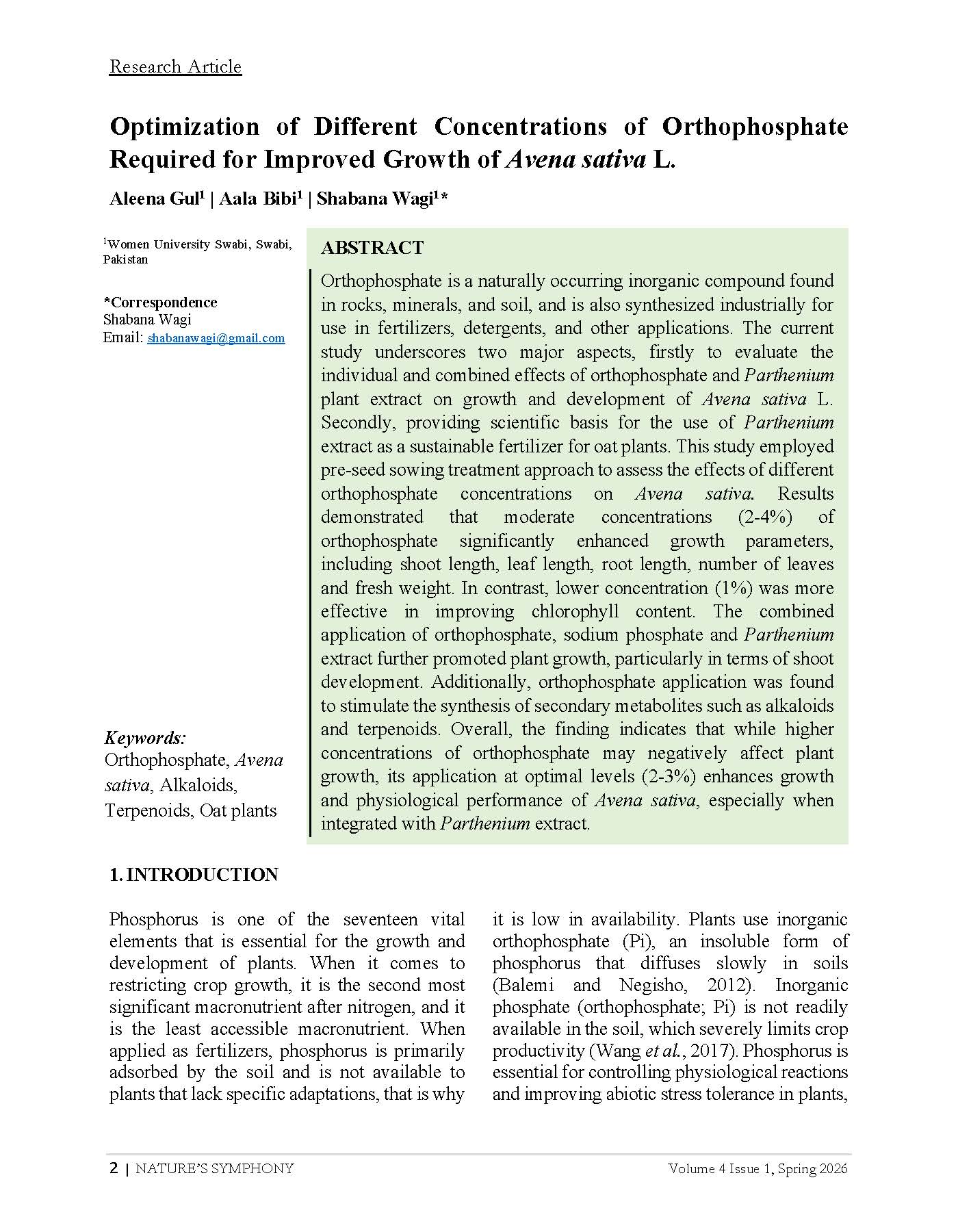
Orthophosphate is a naturally occurring inorganic compound found in rocks, minerals, and soil, and is also synthesized industrially for use in fertilizers, detergents, and other applications. The current study underscores two major aspects, firstly to evaluate the individual and combined effects of orthophosphate and Parthenium plant extract on growth and development of Avena sativa L. Secondly, providing scientific basis for the use of Parthenium extract as a sustainable fertilizer for oat plants. This study employed pre-seed sowing treatment approach to assess the effects of different orthophosphate concentrations on Avena sativa. Results demonstrated that moderate concentrations (2-4%) of orthophosphate significantly enhanced growth parameters, including shoot length, leaf length, root length, number of leaves and fresh weight. In contrast, lower concentration (1%) was more effective in improving chlorophyll content. The combined application of orthophosphate, sodium phosphate and Parthenium extract further promoted plant growth, particularly in terms of shoot development. Additionally, orthophosphate application was found to stimulate the synthesis of secondary metabolites such as alkaloids and terpenoids. Overall, the finding indicates that while higher concentrations of orthophosphate may negatively affect plant growth, its application at optimal levels (2-3%) enhances growth and physiological performance of Avena sativa, especially when integrated with Parthenium extract.
Additional Files
Published
How to Cite
Issue
Section
License
Copyright (c) 2026 Aala Bibi, Aleena Gul, Shabana Wagi

This work is licensed under a Creative Commons Attribution 4.0 International License.
This journal is licensed under a Creative Commons Attribution 4.0 International License (CC BY 4.0), where copyright for articles remains with the authors.
This journal utilizes the Public Knowledge Project’s Preservation Network (PKP PN) and LOCKSS system to ensure long‑term digital preservation of all published content.
This journal provides immediate open access to its content on the principle that making research freely available to the public supports a greater global exchange of knowledge.
