|
1Department of Zoology, The Islamia University of Bahawalpur, Bahawalnagar Campus, Bahawalnagar, Pakistan 2Department of Zoology, The Islamia University of Bahawalpur, Bahawalpur, Pakistan 3Institue of Zoology, Bahauddin Zakariya University, Multan, Pakistan *Correspondence Abir Ishtiaq Muhammad Naeem |
|
ABSTRACT This study was conducted to evaluate the effect of two commercial multispecies probiotic mixtures in dietry feed on length-weight relationships (LWRs) of the commercially important catfish Pangasianodon hypophthalmus. For this, eighty healthy fishes (13.02g ± 1.22) were assigned to four experimental groups, i.e. control group (T0), treatment 1 (T1), treatment 2 (T2) and treatment 3 (T3), with two replicates for each group and raised into experimental cemented ponds (3 ft x 1.5 ft) with 20 fishes in each experimental group. Fishes in T0 (control group) were fed a commercial diet without probiotics, T1 consumed a diet supplemented with Probiotic-A (mixture of Bacillus megaterium and B. licheniformis), T2 was fed a diet enriched with amino peptide juice prepared by using Probiotic-B (mixture of B. amyloliquefaciens, B. subtilis and B. valismortis). In contrast, fishes reared in T3 fed upon a diet same as T2 but on alternative day for 60 days. The experimental diets were manually given to the fish at a rate of 3% by body weight. The total length and weight of each fish specimen were calculated at the end of the feeding trial. The data were examined using the linear regression equation of Log W = Log a + b Log L. All treatments showed a strong correlation between fish length and weight (p < 0.001, range of r2 = 0.601-0.988). The slope (b-values) for P. hypophthalmus were 2.806 (negative allometric growth), 3.138 (positive allometric growth), 2.959 (isometric growth) and 2.690 (negative allometric growth) for T0, T1, T2, and T3 respectively. The results of LWRs in the current study indicate that the application of different probiotics mixtures mainly Bacillus megaterium and B. licheniformis, significantly influenced the growth pattern of P. hypophthalmus. Keywords: Freshwater Catfish, Growth Pattern, In-feed Probiotics, LWR |
In developing and underprivileged regions, a significant rise in population growth is expected to worsen food scarcity. Intensive aquaculture systems have become increasingly prevalent as a viable solution to address the shortage of food, particularly for meeting the protein demand [1]. Currently, effective rearing methods and enhanced nutritional practices are significantly increasing the large-scale aquaculture in Pakistan [2]. Aquaculture production is completely reliant on the supply of nutrients, similar to other terrestrial agricultural approaches. A balanced nutrient diet is crucial for improving fish health and productivity [3]. Fish feed is the primary determinant of the growth potential of farmed fish [4]. Extensive modern aquaculture practices have led to the increased intensification of the aquaculture industry and rising feed costs [5]. Rising feed costs and limited availability require further study into alternatives, including the incorporation of various live microbe supplements, such as probiotics [4].
Probiotics are live microbial formulations that serve as nutritional additives or water supplements, provide various benefits to host organisms through multiple mechanisms. These include the production of inhibitory substances,competitive exclusion of pathogens from intestinal attachment sites, modulation of host immune system, and restoration of intestinal microbial balance [6]. Probiotics support both the fish host and its surrounding environment by promoting beneficial microbial interactions. These microorganisms can colonize and proliferate in the host's intestine, demonstrating a range of advantageous effects by influencing various biological systems in the host [7]. Probiotics enhance the host's intestinal microbial balance, regulate microorganisms, improve the utilization of feed, confer disease resistance, and maintain water quality [8]. Probiotics aid digestion, strengthen the non-specific immune system, increase growth rate, and improve the feed conversion ratio in fish [9].
Different types of bacteria have been used as probiotics mixed with fish feed owing to their growth potential in fishes such as Bacillus, Lactobacillus, Saccharomyces cerevisiae, Aeromonas, etc [10]. Probiotics may be grouped as either single-strain or multispecies based on their microbial composition. Various studies indicate that multispecies probiotics, often provide greater advantages to fish compared to single-strain probiotics [11][12], particularly in Pangasianodon hypophthalmus [6][13][14]. Potential disadvantages associated with the use of probiotics include the fact that probiotics operate more slowly than antibiotics. The effects of probiotics in the intestines of fish is being explored, but no results have been reported in other organs. Furthermore, probiotic microorganisms are unable to maintain themselves tightly at the target site within the host’s body [15].
Fish is crucial for the development of a country due to its affordability and rich source of highly nutritious proteins and essential nutrients. Therefore, research on fish biology specifically morphometric analysis and habitat assessment, is crucial for enhancing fish stock management and conservation efforts [19]. The evaluation and management of fish stocks depends on the correlation between the fish length and weight [20]. The statistical correlations between morphometric measures of fishes are crucial for taxonomists and fisheries biologists [21]. The size of fish reflects their age, diet, and several physiological and environmental factors. In conceptual terms, the size of a fish is indicative of its age since fish continuously grow in size, and their growth is influenced by external factors. Therefore, the variation in size has significant implications fisheries research and population dynamics [22].
The length-weight relationship (LWR) is a valuable tool for studying fish growth pattern and determining their age. It helps in the estimation of weight from length [23], which is necessary for yield assessment and biomass calculation using a mathematical equation correlating length and weight [24]. It offers important data on the structure and functioning of fish populations at specific times. LWR also facilitates the evaluation of fish communities collected from various locations and time periods [22][25].
Length-weight regressions are applied to analyze fish growth patterns i.e. allometric or isometric growth patterns [24]. When the growth is isometric, the fish species did not increase in weight faster than the cube of their total length. However, when the weight of fish’s increases faster than the cube of their total lengths (i.e. the value of '''b' (slope) more than 3), this describes an increase in width or height of the fish more than its length (positive allometry) [25]. Conversely, when the value of '''b' is less than 3, this represents an elongated body shape (negative allometry) [26][27].
Different studies have assessed the effect of dietary probiotics on the LWRs of different fishes, such as juvenile amberjack (Seriola dumerili) [28] and Trichopodus trichopterus [29]. Furthermore, LWRs have also been used to evaluate the potential performance of P. hypophthalmus in natural populations. However, to our knowledge, little or no study has been performed to analyze the effect of multispecies probiotics on LWRs of farmed P. hypophthalmus.
As the inclusion of in-feed probiotics significantly influences the fish growth [9], they may alter the LWR in fish. Therefore, the aim of the present investigation was to assess the impact of mixed-strain probiotic combinations on LWRs and the growth pattern of P. hypophthalmus.
This study received ethical approval from the Animal Ethics Committee, Islamia University of Bahawalpur, Bahawalnagar Campus, Pakistan.
Eighty clinically healthy fishes (13.02±1.22 g, 11.34±0.30 cm) were obtained from a reputed private fish hatchery (Indus Fisheries, Bahawalnagar, Pakistan). The experiment was conducted at the Islamia University of Bahawalpur, Bahawalnagar Campus, Punjab, Pakistan (30°00′46.5″N 73°16′44.3″E). After acclimatization for 7 days, the fingerlings were randomly divided into four experimental groups (two replicates for each group) designated as T0, T1, T2 and T3. They were grouped into eight cemented ponds (3 ft x 1.5 ft) with 10 fishes/pond resulting in 20 fishes per experimental group.
Commercial pelleted feed (2 mm) (Hi-Tech Feeds, Pvt. Ltd., Pakistan) was given to the experimental fishes. This commercial fish feed was fed to the fishes reared in T0 (control group) and used as a basal diet for all probiotic-treated groups. Probiotic-based diets were prepared using two commercial multispecies probiotics:, Engest® Liquid (White Cap™) and Bactipost Plus® Liquid (Red Cap™) by Baxel Co Ltd, sponsored by Aquamimicry (Smc-Pvt) Ltd. These were designated as Probiotic-A and Probiotic-B in the present study. Both liquid probiotic mixtures (A and B) were concentrated with bacterial mixtures. Probiotic-A contained mixtures of Bacillus megaterium and B. licheniformis, and Probiotic-B contained B. subtilis, B. valismortis and B. amyloliquefaciens.
Probiotics were added to the baseline diet according to the company protocols:
Probiotic-A (0.8 µl) was diluted with 1.2 ml water, and sprayed over 8g commercial pelleted feed to achieve proper mixing, then air-dried and given to the T1 treatment group daily. In the T2 treatment group, fish were given a diet mixed with AP (Amino Peptide) juice made from Probiotic-B. To prepare AP juice, 6.7 µl of Probiotic-B was mixed with 18 ml of water, 0.54 g of NaHCO3, 2.7 g of soybean meal and 1.26 g of table salt. This solution was fermented for 10 days. After 10 days of fermentation, AP juice was blended with pelleted feed (basal diet). After drying, the pellets were packed in ziplock bags and provided to fish in the T2 group. Fishes in the T3 group received the same feed as the T2 fish but on alternate days.
Prepared meals were administered twice daily (08:00 and 16:00), constituting 3% of the fish's body weight per day for 60 days [30]. Sampling occurred biweekly to assess the weight of the fish and to modify the feeding rate.
Water quality parameters were monitored fortnightly for all the experimental groups. Dissolved oxygen (DO) was measured using a DO meter (Hanna, HI9146), water temperature was recorded using a standard thermometer, and pH was measured using a pH meter (Hanna, HI2210).
At the end of the feeding trial, the total length (to the nearest 0.1 cm) of each fish specimen from the three treatment groups and control group was measured from the apex of the snout to the extremity of the caudal fin using a measuring board. The body weight was measured using an electronic balance and recorded to the nearest 0.01 g.
The relationship between the length (L) and weight (W) of the fish samples was determined using the following regression equation [24,27]:
W represents total weight in grams, L represents total length in cm; a is the constant (intercept) and b represents the slope. The LWR equation was then converted into a linear form: . If the b value deviates from 3, weight rise is allometric; it is positive when b > 3 and negative when b < 3. If b = 3, the rise in weight is isometric [31]. Data were statistically analyzed using MS Excel and SPSS.
Table 1. Descriptive statistics for the length and weight of P. hypophthalmus
|
Treatment |
N |
Body Length (cm) |
Body Weight (g) |
||
|
Range |
Mean ± S.E |
Range |
Mean ± S.E |
||
|
T0 |
20 |
12.80-15.30 |
13.94 ± 0.17 |
15.70-31.86 |
23.37 ± 1.03 |
|
T1 |
20 |
16.00-18.90 |
17.41 ± 0.20 |
26.20-44.43 |
34.44 ± 1.23 |
|
T2 |
20 |
15.30-18.40 |
16.99 ± 0.19 |
23.64-39.38 |
32.04 ± 1.04 |
|
T3 |
20 |
10.90-15.50 |
13.29 ± 0.29 |
14.06-32.28 |
26.66 ± 1.32 |
N = Number of samples, S.E = Standard error.
Water quality parameters were found to be within the tolerable range for the fish. Mean values of dissolved oxygen, water temperature and pH were observed at 6.30±0.59 mg L-1, 27.92±0.21 ºC and 7.28±0.14, respectively.
Length-weight relationships (LWRs) of P. hypophthalmus from each treatment were evaluated to study the effect of probiotics on these relationships. The range, mean and standard error values of total length (L) and body weight (W) for 80 specimens of P. hypophthalmus fingerlings from four treatment groups are presented in Table 1. The findings indicated that fish fed a diet mixed with Probiotic-A had the highest mean values of total length and weight among P. hypophthalmus.
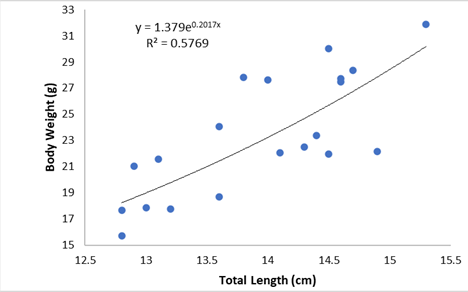
Length-weight relationship's parameters a and b, r-value, and the coefficient of determination r2 are shown in Table 2. The r value ranged from 0.775 in the T0 group to 0.994 in the T1 group, indicating a highly significant correlation among all treatment groups with a value of '''r' 0.990 in the T2 and 0.974 in the T3 treatment. The coefficient of determination (r²) values for all treatment groups indicated significant positive correlations between length and weight (p < 0.001, r2 = 0.601-0.988). The slope (b-values) of the LWRs for P. hypophthalmus were calculated as 2.806, 3.138, 2.959 and 2.690 for T0, T1, T2, and T3, respectively. The estimated b-value indicated a negative allometric growth in all experimental groups except T1. Conversely, positive allometric growth was observed in group T1 (b-value 3.138), which was fed a diet mixed with Probiotic-A. Relative growth curves (total length-total weight) for P. hypophthalmus fed different probiotic treatments are shown in Figure 1-4.
Figure 1. Length-weight relationship of P. hypophthalmus reared in T0 (control)
Table 2. Regression parameters of the length (L)-weight (W) relationships in the linear equation (Log W= a + b Log L) for P. hypophthalmus
|
Treatment |
a |
b |
95% Cl of a |
95% Cl of b |
r |
Growth Pattern |
|
T0 |
-1.848 |
2.806 |
-3.142 to -0.554 |
1.674 – 3.937 |
0.775*** |
A- |
|
T1 |
-2.360 |
3.138 |
-2.569 to -2.151 |
2.969 – 3.306 |
0.994*** |
A+ |
|
T2 |
-2.136 |
2.959 |
-2.391 to -1.882 |
2.752 – 3.165 |
0.990*** |
I |
|
T3 |
-1.676 |
2.690 |
-2.025 to -1.326 |
2.378 – 3.001 |
0.974*** |
A- |
Note: a = intercept; b = slope; Cl = confidence intervals; r = correlation coefficient; *** = P <0.001; A- = negative allometry, A+ = positive allometry, I = Isometry
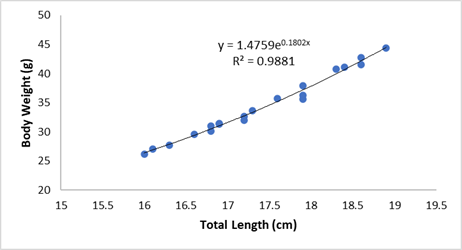
Figure 2. Length-weight relationship of P. hypophthalmus reared in T1
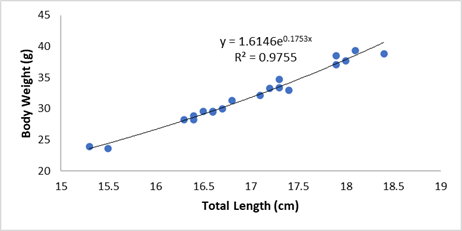
Figure 3. Length-weight relationship of P. hypophthalmus reared in T2
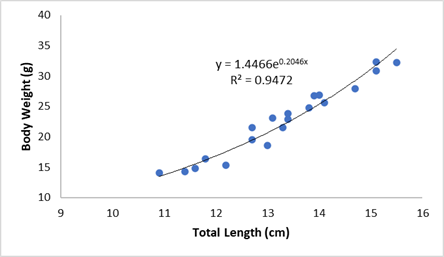
Figure 4. Length-Weight Relationship of P. hypophthalmus reared in T3
The length-weight relationship (LWR) is widely used by researchers as an effective tool in fisheries biology, providing essential insights into the overall health of fish populations [28]. The parameters of LWR are useful for predicting weight based on length [23], calculating condition factors, evaluating stock, and estimating biomass [32]. The use of probiotics is considered as an effective method for improving the overall health of aquatic life [6]. The incorporation of probiotics into the aquaculture has shown improvements in growth performance, water quality, and disease resistance in fish.
The incorporation of probiotics may improve fish productivity, thereby enhancing the financial security of rural fish farmers and serving as an alternative income source [13]. Different studies have shown an increase in P. hypophthalmus growth performance through the use of various probiotics in fish feed [5][6][14][33][34]. This study aims to provide information on the efficacy of dietary probiotics on the length-weight relationship (LWR) of P. hypophthalmus cultured in cemented ponds on commercial feed.
The results show that the total length and weight for farmed P. hypophthalmus and along with their mean values were lowest in groups T0 and T3 and highest in groups T1 and T2. In this study, LWRs showed a significant positive correlation in all four groups (p < 0.001, range of r2 = 0.601-0.988). This LWR provides information about growth patterns. In this study, the values of the slope (b), estimated for all four treatment groups fell within the expected range of 2.5 – 3.5 [27]. The b value in the length-weight equation indicates fish growth patterns [31]; when b = 3, weight gain is isometric, b > 3 signifies positive allometric growth, and b < 3 indicates negative allometric growth [27]. Slope or b-values for LWRs of P. hypophthalmus were calculated as 2.806, 3.138, 2.959, and 2.690 for T0, T1, T2 and T3, respectively. Only fishes in the T1 group, fed a probiotic mixture of Bacillus megaterium and Bacillus licheniformis showed a positive allometric growth pattern (b = 3.138), indicating faster weight gain relative to length. This growth pattern is advantageous in aquaculture since it leads to higher biomass yield, potentially improving production efficiency. Faster weight accumulation can enhance market value, shorten grow periods, and optimize feed utilization, thereby contributing to cost-effective and sustainable aquaculture practices.
Fishes in the T2 group fed probiotics mixture of Bacillus subtilis, Bacillus valismortis, and Bacillus amyloliquefaciens almost showed a very close isometric growth pattern as the value of b was found very close to 3 (b = 2.959). These results in T1 and T2 showing positive and near isometric growth patterns are in accordance with the findings of a study where Bacillus spp. probiotic supplementation of feed caused near isometric growth patterns in Nile Tilapia [35]. Okomoda et al. [36] also observed an isometric growth pattern in the P. hypophthalmus. Fishes in the T1 group (control) and T3 group (fed the same probiotics mixture as in T2 but on alternative days) showed negative allometric growth patterns (b = 2.806 in T1 and b = 2.690 in T3). Results of T3 are consistent with findings of the studies where probiotics in feed resulted in negative allometric growth patterns as in juvenile amberjack fish [28] and in hybrid Nile and Rufiji tilapia populations [37]. The lowest b value was observed in T3 as fishes in T3 received a diet mixed with probiotic mixture B, same as T2, but on alternative days showing the effect of quantity of feed on LWRs.
In the current study, different probiotic mixtures had varying effects on the overall length and weight of the fish. This is consistent with findings from a previous study on Trichopodus trichopterus [29]. Positive allometry in T1 and near isometry in T2 showed that fishes in these treatment groups gained weight faster as compared to length, and fishes in the control group and T3 gained weight slower as indicated by their b values leading to a change in body shape. Fishes in T3 showed negative allometry despite using probiotics due to an alternate-day feeding strategy as compared to T2, where probiotic supplemented feed was given daily.
The environmental factors in the current investigation did not exhibit significant variations among feeding groups. Therefore, the variations in the Slope or b-value for the four studied groups may be due to different probiotic mixture supplementation in the fish basal diet. It was also seen in a similar study by Hoang [32] and Shadrack et al [28] where variations in b value were observed in different treatments due to nutrition supplements. This explains the biological significance of using these probiotic mixtures in aquaculture diet, where the farmers can observe optimal growth in the farmed P. hypophthalmus culture by adding these probiotics into fish feed and increasing overall economic output, as demonstrated by the results in T1 and T2 of this study. The findings of T3 present an interesting aspect in the current study. The T3 group fed a probiotic mixture on alternate days, showed no significant difference in growth pattern compared to the control (T0), suggesting that this feeding strategy could reduce feed costs without compromising growth. This approach may be a cost-effective option for local fish farmers. Numerous biotic and abiotic factors, including reproduction, sex, dietary protein, temperature, fish stocking density, and light intensity [22][26] can influence fish development. The current study did not include these factors.
Multiple factors may be linked to the growth-promoting effects of multispecies probiotics, as observed by the increased fish growth length and weight in the current study: a) stimulation of digestive enzyme activities, leading to improved food digestion [13], b) introduction of probiotics such as Bacillus spp. to fish greatly improves appetite and boosts microbial activity [38], c) probiotics also improve the digestion and nutrient absorption, hence enhancing feeding efficiencies that promote significant fish growth [39].
The variations in b values are mostly influenced by the fish morphology, adiposity, and nutritional supplementation as observed in this study. However, various other factors may also affect b value variations. This encompasses food availability (quality, quantity, and size), seasonal environmental variability, salinity, water temperature, sex, maturation stage, sample size, and length intervals across various regions [19][22][26][40].
Results indicated a positive allometric growth pattern in fishes in T1 and near isometric growth pattern in T2, while a negative allometric growth pattern was observed in T0 and T3 in P. hypophthalmus. Compared to the control group, different mixtures of probiotics were observed in this study to have a positive impact on LWRs of P. hypophthalmus. The findings also suggest that feeding the fish a probiotic-based diet on alternate days can be a cost-effective strategy. According to these results, it is recommended that high productive performance be induced using the multi-strain probiotic mixture of B. megaterium and B. licheniformis as a supplement for increased economic output.