New Inhibitors Predicted for Plasmodium Falciparum Erythrocyte Membrane Protein1 (PfEMP1)
Abdul Wahab1, Adnan Shehzad2, Bibi Ayesha3, Hamid Ur Rahman4*
|
Keywords: Plasmodium falciparum, PfEMP1 inhibitors, Drug repurposing, Molecular docking, Malaria therapeutics |
|
1Centre for Animal Sciences & Fisheries, University of Swat, Swat, Khyber Pakhtunkhwa, Pakistan 2Department of Biotechnology, COMSATS Abbottabad, Abbottabad, Khyber Pakhtunkhwa, Pakistan 3Department of Microbiology, Hazara University Mansehra, Mansehra, Khyber Pakhtunkhwa, Pakistan 4Department of Zoology, Hazara University Mansehra, Mansehra, Khyber Pakhtunkhwa, Pakistan *Correspondence Hamid ur Rahman Email: hamidhu@hu.edu.pk |
|
ABSTRACT Malaria is a mosquito-borne disease caused by several Plasmodium species. It poses a substantial global health burden, infecting approximately 300 million individuals and resulting in over one million mortalities annually. The primary mode of infection occurs through the transmission of sporozoites by infected mosquitoes during blood feeding. Historically, quinine and chloroquine were employed as antimalarial agents during World War II, but the emergence of drug resistance, exacerbated by climate change and irregular treatment adherence, has necessitated the identification of novel therapeutic alternatives. Antimalarial drug resistance has been reported in Plasmodium falciparum and Plasmodium vivax, with varying degrees in different geographical regions. This study aimed to discover alternative drugs by targeting PfEMP1, a key protein that is involved in cytoadhesion and implicated in malaria pathogenesis. Inhibition of the active sites of this protein would result in the disruption of the parasite’s lifecycle. Through insilico drug analysis, four potential inhibitors of PfEMP1 were identified: vancomycin, ofloxacin, febuxostat, and viomycin. Further experimental validation is required to confirm the efficacy of these compounds as alternative treatments for malaria. |
Malaria, a debilitating and widespread mosquito-borne disease, continues to pose a significant threat to global health, particularly in under-resourced tropical and subtropical regions [1]. Among the approximately 156 named Plasmodium species that infect reptiles, birds, and mammals, only four—P. falciparum, P. vivax, P. malariae, and P. ovale—are truly parasitic to humans [2]. The prevalence of malaria has been exacerbated by a combination of biological, ecological, and sociopolitical factors[3,4].
The geographic distribution of malaria is largely concentrated in tropical regions, with a high prevalence in sub-Saharan Africa, followed by the Pacific Islands, South Asia, and Central and South America [1,5,6,7]. Globally, an estimated 3.2 billion people—nearly half of the world’s population—are at risk of contracting malaria. According to the World Health Organization's (WHO) malaria report, 249 million cases were recorded in 2022 across 85 malaria-endemic countries, marking a five-million-case increase from the previous year and resulting in approximately 608,000 deaths [8].
Various drugs have been developed and employed to combat malaria, beginning with quinine in the 17th century. While effective, quinine's severe side effects, including cinchonism, hearing impairment, nausea, and headache, limited its long-term use [9]. Chloroquine (CQ), widely used for over five decades due to its rapid action, affordability, safety, and availability, has faced significant resistance due to intense selective pressure. Resistance to CQ was first reported in the 1950s and has since spread globally, leading to increased morbidity and mortality [10,11]. Similarly, mefloquine, another antimalarial drug targeting the blood schizont stage, has become ineffective due to the emergence of resistance [9]. Other drugs, such as primaquine, atovaquone, and artemisinin, have been employed to treat malaria; however, these therapies are often associated with adverse effects, including hemolysis, nausea, vomiting, and dizziness [9,12].Given the emergence of drug resistance, the toxic effects of existing therapies, and their high costs, there is an urgent need to identify safer, cost-effective, and more accessible alternatives.
The Plasmodium falciparum erythrocyte membrane protein 1 (PfEMP1), encoded by the var gene family, plays a crucial role in malaria pathogenesis. This protein is expressed on the surface of infected erythrocytes and is involved in various parasitic functions, including attachment to host erythrocytes, antigenic variation, and survival in the host [13,14].. Malaria infection elicits a variant-specific immune response, leading to the production of antibodies against the specific PfEMP1 variant expressed by the parasite [15]. While this immune response can provide protection against reinfection by parasites expressing similar variants, the antigenic diversity of PfEMP1 enables the parasite to evade immunity by continually expressing new epitopes [16, 17, 18]. Because PfEMP1 facilitates the adherence of infected erythrocytes to host cells, disrupting its function could significantly impede the parasite's sequestration and reduce malaria infection rates [13, 19]. Given the toxicity and resistance issues associated with existing antimalarial drugs, repurposing FDA-approved drugs offers a promising approach. Drug repurposing or repositioning involves evaluating existing or approved drugs for new therapeutic purposes, particularly in the treatment of infectious diseases [20].
This study was designed to identify potential alternative antimalarial drugs by targeting PfEMP1, offering a novel and cost-effective approach to combat malaria.
2.1 Target Protein Acquisition and 3D Structure Configuration
The amino acid sequence of the target protein, Plasmodium falciparum erythrocyte membrane protein 1 (PfEMP1), was retrieved from the UniProt database [21]. Its three-dimensional structure, resolved at 2.4Å, was obtained from the RCSB Protein Data Bank (PDB ID: 3C64) for subsequent molecular docking analysis [22].
2.2 Active Site Analysis and Interaction Profiling
The 3D structure of PfEMP1 was visualized using DS Visualizer, version 3.1, to identify its active sites. The GS Viewer tool was utilized to elucidate the diverse types of interactions between the protein and the docked ligands [23].
2.3 Bioinformatics Tools for Protein-Ligand Docking
The 3D structures of potential drug candidates were retrieved from the ChemSpider database. Molecular docking simulations were performed using the PatchDock server [24] to predict binding interactions between the ligands and PfEMP1. The top-ranked drugs were further analyzed using DS Visualizer (version 3.1) [25] and GS Viewer [23]. Additionally, LigPlot+ (version 2.2) [26] was employed to generate 2D diagrams of ligand-protein interactions and visualize the key molecular bonds.
3. RESULTS
The current study aimed to identify cost-effective alternative drugs to combat malaria by targeting PfEMP1 through in silico docking of 100 FDA-approved drugs. Among these, four drugs—Vancomycin, Febuxostat, Ofloxacin, and Viomycin—emerged as promising candidates based on their strong binding interactions with the target protein.
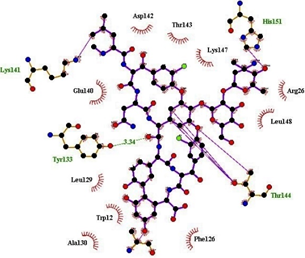
Vancomycin demonstrated robust binding interactions with PfEMP1, forming 15 distinct types of molecular interactions, including covalent, hydrogen, and hydrophobic bonds (Table 1). Key residues, including LYS 141, HIS 151, THR 144, and ALA 127, were involved in covalent bonding, with THR 144 identified as an active site residue. TYR 133, another active site residue, formed hydrogen bonds with the ligand.
Table 1. Types of Interaction between Potential Drugs and PfEMP1
|
Interaction Type |
Vancomycin |
Febuxostat |
Viomycin |
Ofloxacin |
|
Active Site Amino Acids |
TRP 25, LYS 92, THR 102, TYR 133, THR 143 and THR 144 |
TRP 25, LYS 92, THR 102, TYR 133, THR 143 and THR 144 |
TRP 25, LYS 92, THR 102, TYR 133, THR 143 and THR 144 |
TRP 25, LYS 92, THR 102, TYR 133, THR 143 and THR 144 |
|
Covalent Bond Interactions |
LYS 141, HIS 151, THR 144 and ALA 127 |
THR 144 |
TRP25, GLN 58, ASP17
|
THR 144, and ARG 26 |
|
Hydrophobic Bond Interactions |
ASP 142, THR 143, LYS 147, ARG 26, LEU 148, PHE 126, ALA 130, TRP 12, LEU 129 and GLU 140 |
THR 143, TYR 133, TRP12, LEU 19, VAL 15, and HIS 16 |
TRP 55, ASP 21, LYS 54, LYS 48, LYS 47, GLY 44, GLU 28, and LYS 24 |
LEU 19, LYS 147, LEU 148, and HIS 151 |
|
Hydrogen Bond Interactions |
TYR 133 |
THR 144 |
LYS 59, and CYS 51 |
THR 144 |
Furthermore, ten hydrophobic interactions were observed, including THR 143 as the active site residue (Figure 1). Collectively, these interactions suggest that Vancomycin could alter the native structure and function of PfEMP1, potentially disrupting P. falciparum’s ability to adhere to host erythrocytes.
Febuxostat displayed eight distinct interactions with PfEMP1, including covalent and hydrogen bonds as well as hydrophobic interactions (Table 3.1). Key interactions included three covalent bonds formed by THR 144 and one hydrogen bond with the same residue. Additionally, hydrophobic interactions involved two active site residues, TYR 133 and THR 144 (Figure 2).
3.3 Docking Analysis of Ofloxacin with PfEMP1
Ofloxacin exhibited a diverse range of interactions with PfEMP1, including covalent, hydrogen, and hydrophobic bonds (Table 1).
Figure 1. Schematic representation of 2D interaction of the ligand Vancomycin with PfEMP1 generated by Ligplot
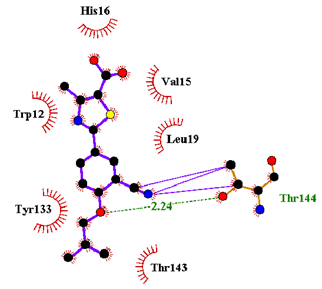
Figure 2 Two-dimension interaction of Febuxostat with PfEMP1 from generated by Ligplot
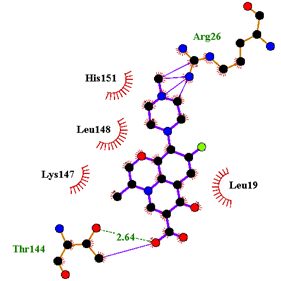
Figure 3. Ligplot-generated diagram of 2D interactions between Ofloxacin and PfEMP1
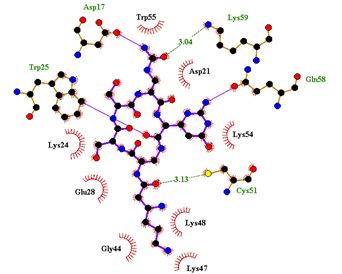
Figure 4. 2D illustration of Viomycin's interaction with PfEMP1, produced by Ligplot
Two key residues, THR 144 and ARG 26, formed covalent bonds, with THR 144 serving as the active site residue. Hydrophobic interactions involved four amino acid residues, and THR 144 also contributed to hydrogen bonding (Figure 3).
3.4 Docking of Viomycin with PfEMP1
Viomycin demonstrated a broad interaction profile with PfEMP1, forming covalent, hydrophobic, and hydrogen bonds (Table 3.1). Three residues, TRP25, GLN58, and ASP17, formed covalent bonds, with TRP25 identified as an active site residue. Hydrogen bonding involved CYS51 and LYS59, while eight residues contributed to hydrophobic interactions (Figure 4).
Malaria remains one of the most widespread and severe parasitic diseases, contributing significantly to global mortality, particularly in underdeveloped regions. The emergence of drug resistance to nearly all existing antimalarial drugs highlights an urgent need for alternative treatment options. This study aimed to identify cost-effective, FDA-approved drugs for repurposing against malaria by targeting Plasmodium falciparum erythrocyte membrane protein 1 (PfEMP1). PfEMP1 is a multifunctional protein that plays a crucial role in the parasite's survival, including antigenic variation, adherence to erythrocytes, and host immune evasion[]]]. By screening over 100 FDA-approved drugs currently used for various medical conditions, we identified Vancomycin, Febuxostat, Ofloxacin, and Viomycin as promising candidates based on their strong molecular interactions with PfEMP1.
Vancomycin, a tricyclic non-ribosomal glycopeptide antibiotic, functions by binding to bacterial cell walls and disrupting their biosynthesis, leading to cell wall rupture【27】. It is widely used to treat diverse infections, including bloodstream infections, meningitis, endocarditis, and bone and joint infections【27, 28】. Molecular docking revealed that Vancomycin exhibited multiple interactions with PfEMP1, including covalent bonds with four residues, one hydrogen bond, and ten hydrophobic interactions (Table 3.1). Such diverse interactions are known to induce irreversible inhibition of target proteins【29, 30】. By interfering with the parasite's attachment mechanism, Vancomycin could potentially prevent the spread of infection【13】. These findings suggest Vancomycin as a strong candidate for further investigation as an antimalarial agent.
Febuxostat, a non-purine inhibitor of xanthine oxidase, is primarily used to treat hyperuricemia in gout patients in the United States and the United Kingdom【31, 33】. However, it is associated with certain adverse effects, including gastrointestinal disturbances, musculoskeletal symptoms, headaches, elevated liver enzymes, and rashes【31】. Docking analysis revealed that Febuxostat interacts with PfEMP1 through eight distinct types of interactions, including covalent bonds, one hydrogen bond, and several hydrophobic interactions (Table 3.1). These interactions suggest the potential for Febuxostat to induce conformational changes in PfEMP1, potentially disrupting its function.
Ofloxacin, a fluorinated quinolone antibiotic, is known to inhibit choline-binding proteins in Streptococcus pneumoniae, thereby interfering with processes such as cell attachment, nasopharyngeal colonization, and bacterial sepsis【34, 35】. It is widely used to treat chronic bronchitis, pneumonia, pelvic inflammatory disease, prostatitis, and gonorrhea【36】. Ofloxacin also inhibits oxygen-insensitive NADPH nitroreductase in Helicobacter pylori, contributing to its role in combating gastric lymphoma【37】. Molecular docking revealed that Ofloxacin forms covalent, hydrophobic, and hydrogen bonds with PfEMP1 (Table 3.1), indicating its potential to inhibit parasite adherence to host erythrocytes effectively.
Viomycin, a member of the tuberactinomycin family, was historically used to treat tuberculosis before being replaced by less toxic alternatives, such as Capreomycin【38】. Tuberactinomycins disrupt bacterial protein synthesis by targeting RNA and ribosome binding【39】. Docking analysis revealed that Viomycin forms covalent, hydrophobic, and hydrogen bonds with PfEMP1 (Table 3.1). This diverse interaction profile suggests the dual therapeutic utility of Viomycin in treating both malaria and tuberculosis. However, further experimental studies are essential to fully explore and validate its potential.
In conclusion, this study demonstrates the potential of Vancomycin, Febuxostat, Ofloxacin, and Viomycin as alternative drugs for malaria treatment. Their strong molecular interactions with PfEMP1 highlight their promise as repurposed therapeutic agents. Further in vivo and in vitro investigations are needed to validate their efficacy and safety, paving the way for novel and cost-effective antimalarial therapies.
The present study aimed to inhibit the erythrocyte membrane protein-1 (PfEMP1) of Plasmodium falciparum by exploring alternative drugs through in silico docking analysis. Docking experiments revealed strong and promising interactions between PfEMP1 and the drugs Ofloxacin, Vancomycin, Febuxostat, and Viomycin. Based on these findings, we conclude that these drugs hold potential as alternative treatment options for malaria. However, further in vivo and in vitro investigations, as well as rigorous laboratory testing, are essential to validate their efficacy and safety for clinical use.
Conflict of Interests
The authors declare no conflict of interest.
REFERENCES