A Red Alert for Eye Conjunctivitis in Pakistan: A Call for Action and Awareness
|
ABSTRACT For the recent upsurge in the cases of conjunctivitis particularly in Punjab, Pakistan has reached an alarming level. Till September 2023, almost 395,929 cases have been reported only in Punjab because of such an endemic condition schools have been temporarily closed. About 17000 cases were reported alone in Bahawalpur nearly doubling the figures from the previous month but currently, the epicenter of the break is Lahore as the recent outbreaks have also been seen worldwide like Malaysia, Taiwan, Japan, Brazil, and India. The primary cause of the epidemic is coxsackievirusA24 confirmed through genomic analysis. Coxsackievirus A24 is a non-enveloped, positive-stranded RNA virus which produces a polyprotein that forms a structural and non-structural component. This is responsible for acute hemorrhage conjunctivitis which is a viral disease and can spread rapidly as the virus belongs to a highly contagious genotype 4. Its symptoms are redness, pain, irritation discharge from the eye, and light sensitivity with an incubation period of 24 to 48 hours. Transmission can occur through hand-to-eye and eye-to-hand contact of the infected person as well as through contaminated surfaces. As the virus has the belated to evolved rapidly preventive measures are a necessity which include prevention from touching the eyes, practicing regular hand washing, cleaning contact lenses frequently, avoiding the sharing of personal items and using protective eyewear. |
|
Keywords: Eye conjunctivitis; Pink eye; Eye redness; Coxsackievirus A24; Enterovirus |
Abdur Rehman Asghar1 | Aleena Haqqi1* | Hira Muzammal1 | Hafiza Aqsa1
|
1School of Medical Laboratory Technology, School of Allied Health Sciences, Minhaj University, Lahore, Pakistan *Correspondence Aleena Haqqi Email: aleenahaqqi.mlt@mul.edu.pk |
Dear Editor
Nowadays, eye flu is the talk of Punjab in Pakistan. As of September 2023, a total of 395,929 eye conjunctivitis cases in the 36 districts of Punjab alone have been reported. The massive outbreak of eye conjunctivitis is on the rise, which resulted in the precautionary steps by the government to shut down schools as 13,000 new cases emerged in a single day.1 So, it is pertinent to highlight this outbreak of eye conjunctivitis, primarily caused by Coxsackievirus A24 (Family: Picornaviridae, Genus: Enterovirus, Group: human enteroviruses). The actual numbers are multiples of these numbers as most people go unreported and recover from this without some severe treatment. In the month of September the epicenter of infection was Lahore, but Bahawalpur leaded the chart with approximately 17000 cases. The numbers have almost doubled from August, over the span of three weeks. 2 However, eye conjunctivitis can be caused by bacteria, allergens, and viruses.
The culprit for the current epidemic of conjunctivitis in Pakistan is Coxsackievirus A24, which was confirmed through the Next Generation Sequencing (NGS) metagenomics approach. The genomic analysis revealed that the sequenced samples belonged to genotype IV3
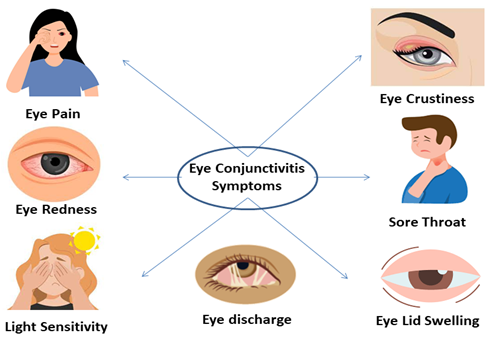
Acute hemorrhagic conjunctivitis (AHC) is mainly caused by enteroviruses, which also cause diseases like poliomyelitis, hand-foot-mouth disease, herpangina, and aseptic meningitis. AHC is a viral disease and has the potential to spread rapidly as it is highly contagious. Conjunctivitis caused by Coxsackievirus A24 is also called pink eye infection, red eye, and eye flu. Redness, pain, discharge from the eyes, irritation, and abnormal sensitivity to light to the eyes are associated with this type of infection. The incubation period is 24-48 hours, and infection may hang there for 3-7 days. The transmission of enterovirus is primarily by hand-to-eye and eye-to-hand and also by infected fomites. 4 Coxsackievirus A24 attacks a thin layer of eyes called conjunctiva, which lines the eyeball and eyelid. Thin blood vessels are present in the conjunctiva. The virus causes inflammation in blood vessels and causes redness in the eyes. This is the reason behind calling it a red eye or pink eye infection. 5
Coxsackievirus A24 is a non-enveloped Positive stranded RNA virus having a genome of 7400 bp. 6 The 5’ end untranslated region (UTR) is of 740 bp. The Coxsackievirus A24 RNA generates a single polyprotein which conventionally forms four structural proteins that make up the capsid components of the virus (VP1-VP4) and seven nonstructural viral proteins (2A-2C,3A-3D). As Coxsackievirus A24 can evolve almost 106 times quickly so the best way to stay away from it is to follow preventions. 7 The genomic analysis by National Institute of Health (NIH), Islamabad found three non-synonymous mutations in the VP1 region named as H25P, I89V, I90L which, which consequently affect the viral transmission, infectivity, and immune response. 5
Figure 1. Symptoms of Viral Eye Conjunctivitis
This virus also caused outbreaks in other parts of the world, like Malaysia, Taiwan, Japan, Brazil, India, and many more. Through genetic analysis of the 3C protease region and VP1 capsid, we discovered all these conjunctivitis epidemics in different parts of the world owing to varying strains of the same Coxsackievirus A24. 8 A recent outbreak has been seen in Pakistan, India & Vietnam. Over 38000 cases had been reported in August in India. 9 The etiology of previous eye conjunctivitis outbreaks in Pakistan in 1986 and 2004-2005 can also be attributed to Coxsackievirus A24. 5
For diagnosis, cell cultures can be employed, and PCR amplification can also be performed as its symptoms may resemble some other eye conditions. 10 Doctors may recommend some daily use of eye drops, artificial tears, or cold compress on eyes basis of the severity of symptoms. Only a few people need antiviral drugs. 10 This outbreak of highly contagious eye conjunctivitis can be controlled through preventive measures by avoiding rubbing eyes with hands, washing hands, and regularly cleaning contact lenses. avoid sharing clothes, towels, and other personal things, and use protective eyewear. 11
REFERENCE